The pharmaceutical industry stands on the cusp of a transformative era, driven by the rapid advancement of artificial intelligence (AI). For decades, drug discovery has been a notoriously lengthy, expensive, and often inefficient process. But AI is poised to change all that, offering the potential to accelerate timelines, reduce costs, and, most importantly, increase the success rate of bringing life-saving medications to patients.
The Traditional Drug Discovery Pipeline: A Challenging Landscape
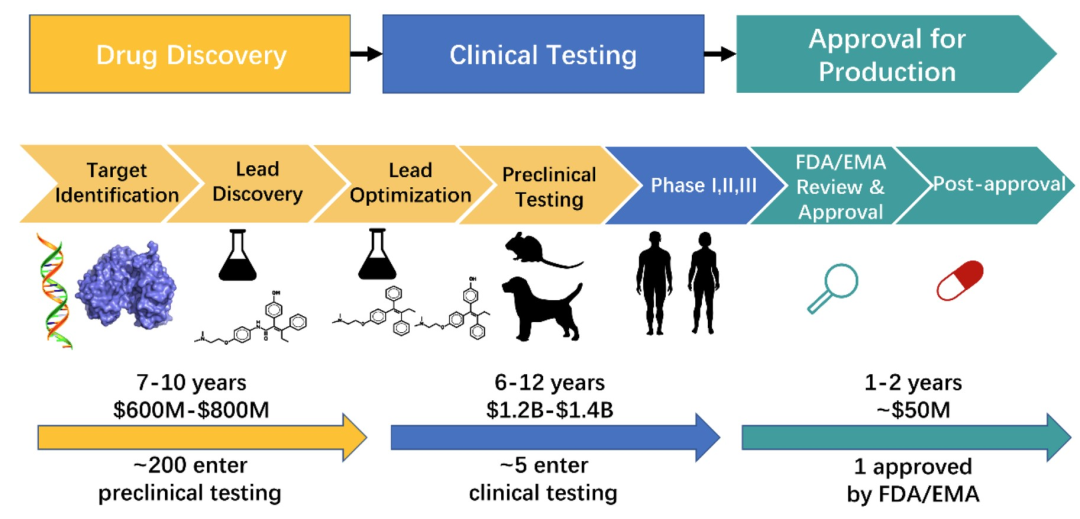
Before diving into AI’s impact, it’s essential to understand the traditional drug discovery process. It typically involves several stages:
- Target Identification: Identifying a specific molecule (usually a protein) within the body that plays a role in a disease and can be targeted by a drug.
- Hit Discovery: Screening vast libraries of chemical compounds to find "hits" – molecules that show some interaction with the target.
- Lead Optimization: Modifying the hit compounds to improve their potency, selectivity, and other properties, turning them into "lead" compounds.
- Preclinical Development: Testing the lead compounds in vitro (in cells) and in vivo (in animals) to assess their safety and efficacy.
- Clinical Trials: Conducting human trials in phases (Phase I, II, and III) to evaluate safety, dosage, and effectiveness in a larger population.
- Regulatory Approval: Submitting data to regulatory agencies (like the FDA in the US) for approval to market the drug.
This process can take 10-15 years and cost billions of dollars, with a high failure rate at each stage. Many promising drug candidates fail due to unforeseen side effects, lack of efficacy, or difficulties in manufacturing.
AI: A Game Changer for Drug Discovery
AI is now being applied to virtually every stage of the drug discovery pipeline, offering solutions to many of the challenges that have plagued the industry for years. Here’s how:
Target Identification:
- Data Mining and Analysis: AI algorithms can analyze vast datasets of genomic, proteomic, and clinical data to identify novel drug targets that may have been overlooked by traditional methods. Machine learning models can find patterns and correlations that point to potential therapeutic targets.
- Disease Modeling: AI can create sophisticated models of diseases, simulating how they progress and identifying key molecular players that could be targeted by drugs.
- Network Biology: AI can analyze complex biological networks to understand how different genes, proteins, and other molecules interact in disease states, helping to pinpoint the most promising targets.
Hit Discovery:
- Virtual Screening: AI algorithms can screen millions of compounds virtually, predicting their binding affinity and activity against a target protein. This dramatically reduces the number of compounds that need to be physically synthesized and tested, saving time and resources.
- Generative Chemistry: AI can design novel molecules with desired properties, such as high potency, selectivity, and drug-likeness. These AI-generated molecules can then be synthesized and tested in the lab.
- De Novo Drug Design: AI can design drugs from scratch, without starting from existing compounds. This opens up the possibility of discovering entirely new classes of drugs that would not have been found using traditional methods.
Lead Optimization:
- Predictive Modeling: AI can predict how changes to a molecule’s structure will affect its properties, such as its potency, selectivity, toxicity, and bioavailability. This allows researchers to optimize lead compounds more efficiently.
- ADMET Prediction: AI can predict a drug’s Absorption, Distribution, Metabolism, Excretion, and Toxicity (ADMET) properties, helping to identify and eliminate compounds that are likely to fail in later stages of development.
- Personalized Medicine: AI can analyze a patient’s genetic and clinical data to predict how they will respond to a particular drug, allowing for more personalized treatment decisions.
Preclinical Development:
- Animal Model Prediction: AI can predict how a drug will behave in animal models, reducing the number of animals needed for testing.
- Toxicity Prediction: AI can predict the potential toxicity of a drug, helping to identify and eliminate compounds that are likely to cause harm to patients.
Clinical Trials:
- Patient Recruitment: AI can identify and recruit patients for clinical trials more efficiently, speeding up the trial process.
- Data Analysis: AI can analyze clinical trial data to identify patterns and insights that may not be apparent using traditional statistical methods.
- Outcome Prediction: AI can predict a patient’s response to a drug during a clinical trial, allowing for more personalized treatment decisions and potentially rescuing trials that would otherwise fail.
Examples of AI in Action:
Several companies are already using AI to accelerate drug discovery and development:
- Atomwise: Uses AI to predict the activity of small molecules, helping to identify potential drug candidates for a variety of diseases.
- Exscientia: Uses AI to design and optimize drug candidates, reducing the time and cost of drug discovery.
- Insilico Medicine: Uses AI to identify novel drug targets and design new drugs for age-related diseases.
- BenevolentAI: Uses AI to analyze biomedical data and identify potential drug candidates for a variety of diseases.
- DeepMind: Uses AI to predict the 3D structure of proteins, which can help to identify potential drug targets.
Challenges and Opportunities
While AI holds tremendous promise for drug discovery, there are also challenges that need to be addressed:
- Data Quality and Availability: AI algorithms require large, high-quality datasets to train on. However, biomedical data is often incomplete, inconsistent, and difficult to access.
- Explainability: Many AI algorithms are "black boxes," meaning that it is difficult to understand how they arrive at their predictions. This can make it difficult to trust their results and to use them to guide drug discovery efforts.
- Regulatory Hurdles: Regulatory agencies are still developing guidelines for the use of AI in drug discovery. This uncertainty can make it difficult for companies to adopt AI technologies.
- Ethical Considerations: There are ethical concerns about the use of AI in drug discovery, such as the potential for bias in algorithms and the impact on jobs.
Despite these challenges, the opportunities for AI in drug discovery are vast. As AI technologies continue to improve and as more data becomes available, AI is likely to play an increasingly important role in the development of new and better medicines.
The Future of Drug Discovery: A Collaborative Approach
The future of drug discovery will likely involve a collaborative approach, where AI is used to augment the expertise of human scientists. AI can help to automate tasks, analyze data, and generate hypotheses, while human scientists can use their knowledge and intuition to guide the process and make critical decisions.
By combining the power of AI with the expertise of human scientists, we can accelerate the development of new medicines and improve the lives of patients around the world.
Conclusion
AI is not just a technological advancement; it represents a fundamental shift in how we approach drug discovery. By addressing the inefficiencies and limitations of traditional methods, AI is paving the way for a future where new therapies are developed faster, cheaper, and with a higher likelihood of success. While challenges remain, the potential benefits of AI in drug discovery are too significant to ignore. As the technology matures and its applications expand, we can expect to see a new era of precision and efficiency in the pharmaceutical industry, ultimately leading to better health outcomes for all.


Comments
Post a Comment