Genetic engineering, the process of modifying an organism’s DNA to alter its characteristics, has been a field of scientific exploration for decades. From developing disease-resistant crops to creating new treatments for genetic disorders, the potential applications of genetic engineering are vast and transformative. However, traditional methods of genetic engineering were often time-consuming, expensive, and prone to errors. This all changed with the advent of CRISPR-Cas9 technology, a revolutionary tool that has transformed the field, making genetic engineering more precise, efficient, and accessible than ever before.
Understanding CRISPR-Cas9 Technology
CRISPR-Cas9, short for Clustered Regularly Interspaced Short Palindromic Repeats and CRISPR-associated protein 9, is a gene-editing technology derived from a naturally occurring defense mechanism in bacteria. Bacteria use the CRISPR-Cas9 system to protect themselves from viral infections by recognizing and cutting the DNA of invading viruses. Scientists have harnessed this system to precisely edit genes in a wide range of organisms, including humans.
The CRISPR-Cas9 system consists of two key components:
Cas9 Enzyme: Cas9 is an enzyme that acts as a pair of molecular scissors. It can cut DNA at a specific location in the genome.
Guide RNA (gRNA): The guide RNA is a short RNA sequence that is complementary to the DNA sequence that needs to be edited. The gRNA guides the Cas9 enzyme to the precise location in the genome where the cut needs to be made.
How CRISPR-Cas9 Works
The CRISPR-Cas9 system works through a simple yet elegant process:

Designing the Guide RNA: Scientists design a guide RNA that matches the DNA sequence they want to edit. This guide RNA is typically about 20 nucleotides long and is designed to bind to a specific region of the genome.
Delivering the CRISPR-Cas9 System: The CRISPR-Cas9 system, consisting of the Cas9 enzyme and the guide RNA, is delivered into the cell. This can be achieved using various methods, such as viral vectors, plasmids, or direct injection.
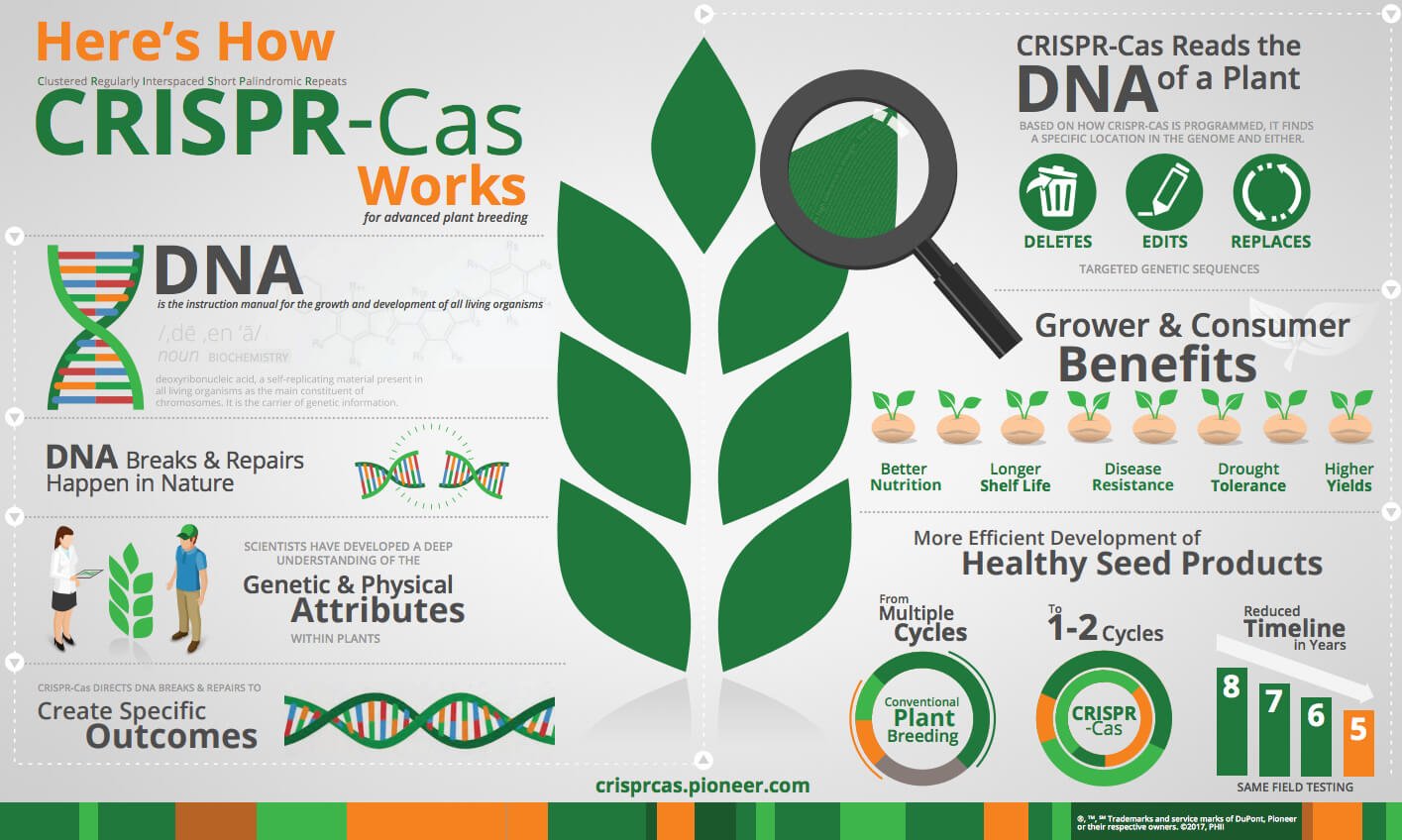
Targeting the DNA: Once inside the cell, the guide RNA directs the Cas9 enzyme to the target DNA sequence. The guide RNA binds to the DNA, and the Cas9 enzyme cuts the DNA at the specified location.
DNA Repair: After the DNA is cut, the cell’s natural DNA repair mechanisms kick in. There are two main pathways for DNA repair:
Non-Homologous End Joining (NHEJ): This pathway is error-prone and often results in small insertions or deletions (indels) at the cut site. These indels can disrupt the gene, effectively knocking it out.
Homology-Directed Repair (HDR): This pathway uses a DNA template provided by scientists to repair the cut. By providing a template with a desired sequence, scientists can precisely edit the gene.
Advantages of CRISPR-Cas9 Technology
CRISPR-Cas9 technology offers several advantages over traditional gene-editing methods:
Precision: CRISPR-Cas9 is highly precise and can target specific DNA sequences with minimal off-target effects.
Efficiency: CRISPR-Cas9 is more efficient than traditional methods, allowing for faster and more reliable gene editing.
Accessibility: CRISPR-Cas9 is relatively easy to use and requires less specialized equipment and expertise, making it accessible to a wider range of researchers.
Cost-Effectiveness: CRISPR-Cas9 is more cost-effective than traditional gene-editing methods, making it a more affordable option for research and development.
Versatility: CRISPR-Cas9 can be used to edit genes in a wide range of organisms, including bacteria, plants, animals, and humans.
Applications of CRISPR-Cas9 Technology
CRISPR-Cas9 technology has a wide range of applications in various fields, including:
Disease Treatment: CRISPR-Cas9 is being used to develop new treatments for genetic disorders, such as cystic fibrosis, sickle cell anemia, and Huntington’s disease. It can be used to correct the mutated genes that cause these diseases, offering the potential for a cure.
Cancer Therapy: CRISPR-Cas9 is being explored as a tool for cancer therapy. It can be used to target and destroy cancer cells, or to modify immune cells to make them more effective at fighting cancer.
Drug Discovery: CRISPR-Cas9 can be used to identify new drug targets and to develop new drugs. By knocking out specific genes, scientists can study their function and identify potential targets for drug development.
Agriculture: CRISPR-Cas9 is being used to develop crops that are more resistant to pests, diseases, and environmental stresses. It can also be used to improve crop yields and nutritional content.
Basic Research: CRISPR-Cas9 is a powerful tool for basic research, allowing scientists to study gene function and to understand the mechanisms of disease.
Diagnostics: CRISPR-Cas systems are being adapted for diagnostic purposes, allowing for rapid and sensitive detection of pathogens, genetic mutations, and other biomarkers.
Ethical Considerations
While CRISPR-Cas9 technology holds immense promise, it also raises ethical concerns:
Off-Target Effects: Although CRISPR-Cas9 is highly precise, it can sometimes cut DNA at unintended locations, leading to off-target effects. These off-target effects can have unintended consequences and could potentially be harmful.
Germline Editing: Germline editing involves making changes to the DNA of reproductive cells (sperm or eggs). These changes would be passed on to future generations. Germline editing raises ethical concerns because it could have unintended consequences for future generations and could potentially be used to create "designer babies."
Accessibility and Equity: There are concerns that CRISPR-Cas9 technology may not be accessible to everyone, leading to disparities in healthcare and research. It is important to ensure that CRISPR-Cas9 technology is used in a way that benefits all of humanity, not just a select few.
Dual Use: CRISPR-Cas9 technology could potentially be used for malicious purposes, such as creating bioweapons. It is important to develop safeguards to prevent the misuse of CRISPR-Cas9 technology.
The Future of CRISPR-Cas9 Technology
CRISPR-Cas9 technology is still in its early stages of development, and there is much more to learn about its potential and limitations. However, it is clear that CRISPR-Cas9 has the potential to revolutionize genetic engineering and to transform medicine, agriculture, and other fields.
In the future, we can expect to see:
Improved Precision: Scientists are working to improve the precision of CRISPR-Cas9 technology to minimize off-target effects.
New Applications: New applications of CRISPR-Cas9 technology are being developed all the time.
Clinical Trials: Clinical trials using CRISPR-Cas9 technology are underway for a variety of diseases.
Ethical Guidelines: Ethical guidelines are being developed to ensure that CRISPR-Cas9 technology is used responsibly.
Conclusion
CRISPR-Cas9 technology is a revolutionary tool that has transformed the field of genetic engineering. It offers several advantages over traditional methods, including precision, efficiency, accessibility, cost-effectiveness, and versatility. CRISPR-Cas9 has a wide range of applications in various fields, including disease treatment, cancer therapy, drug discovery, agriculture, and basic research.
While CRISPR-Cas9 technology holds immense promise, it also raises ethical concerns. It is important to address these ethical concerns and to develop safeguards to ensure that CRISPR-Cas9 technology is used responsibly and for the benefit of all humanity. As research continues and clinical trials progress, CRISPR-Cas9 is poised to reshape our approach to treating diseases, improving agriculture, and understanding the fundamental mechanisms of life. The future of genetic engineering is undoubtedly intertwined with the continued development and responsible application of this groundbreaking technology.


Comments
Post a Comment