Consciousness, the subjective awareness of oneself and the surrounding world, stands as one of the most profound and enduring mysteries in science and philosophy. For centuries, thinkers have pondered its nature, origin, and function. In recent decades, neuroscience has emerged as a powerful tool for unraveling the biological underpinnings of consciousness, offering tantalizing glimpses into the neural processes that give rise to our inner experiences.
Defining the Elusive: What is Consciousness?
Before delving into the neuroscience, it’s crucial to define what we mean by "consciousness." This is no easy task, as the term encompasses a wide range of phenomena. Generally, consciousness can be understood as:
- Awareness: The ability to perceive and respond to stimuli, both internal (e.g., thoughts, emotions) and external (e.g., sights, sounds).
- Subjectivity: The quality of having personal experiences, feelings, and perspectives that are unique to the individual.
- Self-awareness: The capacity to recognize oneself as a distinct entity, separate from the environment and other individuals.
- Sentience: The ability to experience sensations and emotions, including pleasure and pain.
These aspects of consciousness are not mutually exclusive, and they may exist on a spectrum of complexity. A simple organism might exhibit basic awareness, while a human being possesses a highly developed form of self-awareness and subjective experience.
The Neural Correlates of Consciousness (NCC)
Neuroscience seeks to identify the specific brain structures and activity patterns that are necessary and sufficient for consciousness to arise. These are known as the Neural Correlates of Consciousness (NCC). Pinpointing the NCC is a complex endeavor, as consciousness is likely an emergent property of distributed neural networks rather than a localized function of a single brain region.
Nevertheless, researchers have made significant progress in identifying brain areas that appear to play a critical role in conscious experience. Some of the key regions implicated in consciousness include:
- The Cerebral Cortex: The outer layer of the brain, responsible for higher-level cognitive functions such as perception, language, and reasoning. The prefrontal cortex, in particular, is thought to be involved in self-awareness and conscious decision-making.

- The Thalamus: A relay station that filters and transmits sensory information to the cortex. The thalamus is believed to play a crucial role in regulating arousal and attention, which are necessary for conscious awareness.
- The Brainstem: The lower part of the brain that connects to the spinal cord. The brainstem contains nuclei that control vital functions such as breathing and heart rate, as well as the reticular activating system (RAS), which regulates wakefulness and alertness.
- The Posterior Parietal Cortex: Involved in spatial awareness, attention, and the integration of sensory information. Damage to this area can result in neglect syndrome, where individuals are unaware of one side of their body or the environment.
Methods for Studying Consciousness in the Brain
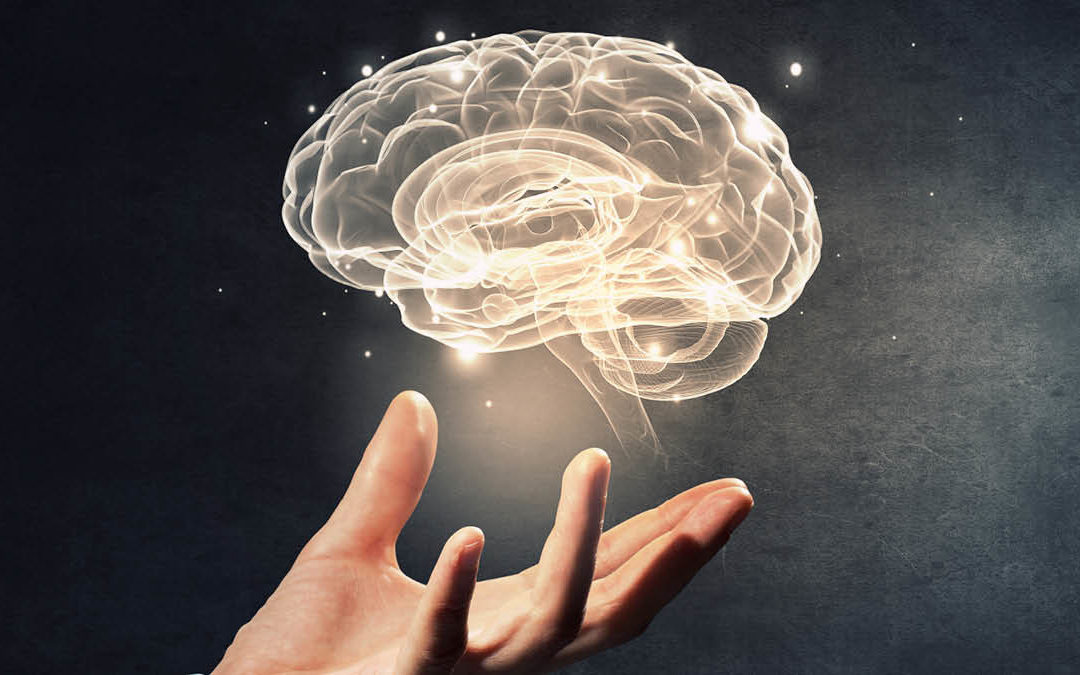
Neuroscientists employ a variety of techniques to investigate the neural basis of consciousness. These include:
- Brain Imaging: Techniques such as fMRI (functional magnetic resonance imaging) and EEG (electroencephalography) allow researchers to measure brain activity in real-time. fMRI detects changes in blood flow, providing an indirect measure of neural activity, while EEG measures electrical activity using electrodes placed on the scalp.
- Lesion Studies: Examining the effects of brain damage on conscious experience. By studying individuals with specific brain lesions, researchers can infer the function of the damaged area.
- Stimulation Studies: Using electrical or magnetic stimulation to activate or inhibit specific brain regions. Transcranial magnetic stimulation (TMS) is a non-invasive technique that can be used to temporarily disrupt neural activity.
- Animal Models: Studying consciousness in non-human animals. While it is impossible to directly assess subjective experience in animals, researchers can investigate the neural mechanisms underlying awareness and attention.
Theories of Consciousness
Several prominent theories attempt to explain how consciousness arises from the brain. Some of the most influential include:
- Integrated Information Theory (IIT): This theory proposes that consciousness is proportional to the amount of integrated information that a system possesses. Integrated information refers to the degree to which a system’s parts are interconnected and interdependent. According to IIT, any system that possesses a sufficient amount of integrated information, whether it is a brain or a computer, is conscious to some degree.
- Global Workspace Theory (GWT): This theory suggests that consciousness arises when information is broadcast globally throughout the brain, making it available to a wide range of cognitive processes. According to GWT, conscious experience is like a "global workspace" where different brain modules can share information and coordinate their activity.
- Higher-Order Thought (HOT) Theories: These theories propose that consciousness requires a higher-order representation of one’s own mental states. In other words, to be conscious of a thought or feeling, one must also be aware that one is having that thought or feeling.
- Predictive Processing: This framework suggests that the brain is constantly generating predictions about the world and comparing those predictions to sensory input. Consciousness arises from the brain’s attempt to minimize prediction errors and create a coherent model of reality.
Challenges and Future Directions
Despite significant advances, the neuroscience of consciousness remains a challenging and complex field. Some of the key challenges include:
- The Hard Problem of Consciousness: Explaining how subjective experience arises from physical processes. This is often referred to as the "hard problem" because it is not clear how objective measurements of brain activity can account for the qualitative feel of consciousness.
- Distinguishing Correlation from Causation: Determining whether observed neural activity is actually causing conscious experience, or simply correlated with it.
- Developing Objective Measures of Consciousness: Creating reliable and valid ways to assess consciousness in individuals who cannot communicate, such as patients in a coma or vegetative state.
- Integrating Different Theories: Reconciling the various theories of consciousness into a unified framework.
Future research in the neuroscience of consciousness will likely focus on:
- Developing more sophisticated brain imaging techniques: To better understand the dynamics of neural activity during conscious experience.
- Investigating the role of specific neurotransmitters and neuromodulators: In regulating consciousness.
- Exploring the relationship between consciousness and other cognitive functions: Such as attention, memory, and language.
- Studying consciousness in different species: To gain insights into the evolution of consciousness.
Ethical Implications
As our understanding of the neural basis of consciousness deepens, it is essential to consider the ethical implications of this knowledge. For example, if we can identify the neural signatures of consciousness, we may be able to develop technologies to manipulate or enhance conscious experience. This raises questions about the potential for misuse, such as the creation of mind-control devices or the exploitation of vulnerable individuals.
Moreover, our understanding of consciousness has implications for how we treat individuals with disorders of consciousness, such as coma or vegetative state. If we can determine whether these individuals are capable of conscious experience, we may need to revise our ethical guidelines for their care.
Conclusion
The neuroscience of consciousness is a rapidly evolving field that holds great promise for unraveling one of the most profound mysteries of the human condition. While many challenges remain, researchers are making steady progress in identifying the neural correlates of consciousness and developing theories to explain how subjective experience arises from the brain. As our understanding of consciousness deepens, it is crucial to consider the ethical implications of this knowledge and to use it responsibly to improve the lives of others. The journey into the depths of the conscious mind is only just beginning, and the discoveries that lie ahead promise to revolutionize our understanding of ourselves and the world around us.


Comments
Post a Comment