For decades, surgical training has relied on traditional methods: textbooks, anatomical models, observation, and hands-on practice on cadavers or, more recently, simulation platforms. While these approaches have proven effective, they often present limitations in terms of accessibility, realism, cost, and the ability to provide personalized feedback. Augmented reality (AR) is rapidly emerging as a game-changing technology that addresses these shortcomings, offering a transformative approach to surgical education.
The Core Principles of Augmented Reality
At its core, AR enhances the real world by overlaying digital information onto a user’s view. Unlike virtual reality (VR), which immerses users in a completely simulated environment, AR keeps users grounded in reality while providing contextual information, guidance, and interactive elements. This blend of the physical and digital worlds makes AR an ideal tool for surgical training, where trainees need to interact with real instruments and anatomical structures while receiving real-time feedback and guidance.
Key Benefits of AR in Surgical Training
Enhanced Anatomical Understanding: AR allows trainees to visualize complex anatomical structures in 3D, superimposed directly onto a patient or anatomical model. This provides a deeper understanding of spatial relationships, tissue layers, and critical landmarks, which can be challenging to grasp from traditional textbooks or 2D images. AR applications can highlight specific structures, display cross-sectional views, and even simulate the effects of surgical interventions on surrounding tissues.
Improved Surgical Skills: AR can provide real-time guidance and feedback during surgical procedures, helping trainees to refine their technique and improve their precision. AR systems can overlay virtual instruments onto the surgical field, guiding the trainee’s movements and providing feedback on their accuracy and efficiency. They can also highlight critical structures to avoid, such as nerves or blood vessels, reducing the risk of complications.
Increased Accessibility and Flexibility: Traditional surgical training often requires access to specialized facilities, cadavers, or expensive simulation equipment. AR, on the other hand, can be deployed on readily available devices such as tablets, smartphones, or AR headsets, making it more accessible and flexible. Trainees can practice surgical procedures anytime, anywhere, without the need for specialized infrastructure.

Reduced Costs: The cost of traditional surgical training can be substantial, including the cost of cadavers, simulation equipment, and faculty time. AR can help to reduce these costs by providing a more affordable and scalable training solution. AR applications can be developed and distributed at a fraction of the cost of traditional training methods, making them accessible to a wider range of trainees and institutions.
Personalized Learning: AR can be tailored to the individual needs and learning styles of each trainee. AR systems can track the trainee’s performance, identify areas where they are struggling, and provide personalized feedback and guidance. This allows trainees to learn at their own pace and focus on the areas where they need the most improvement.
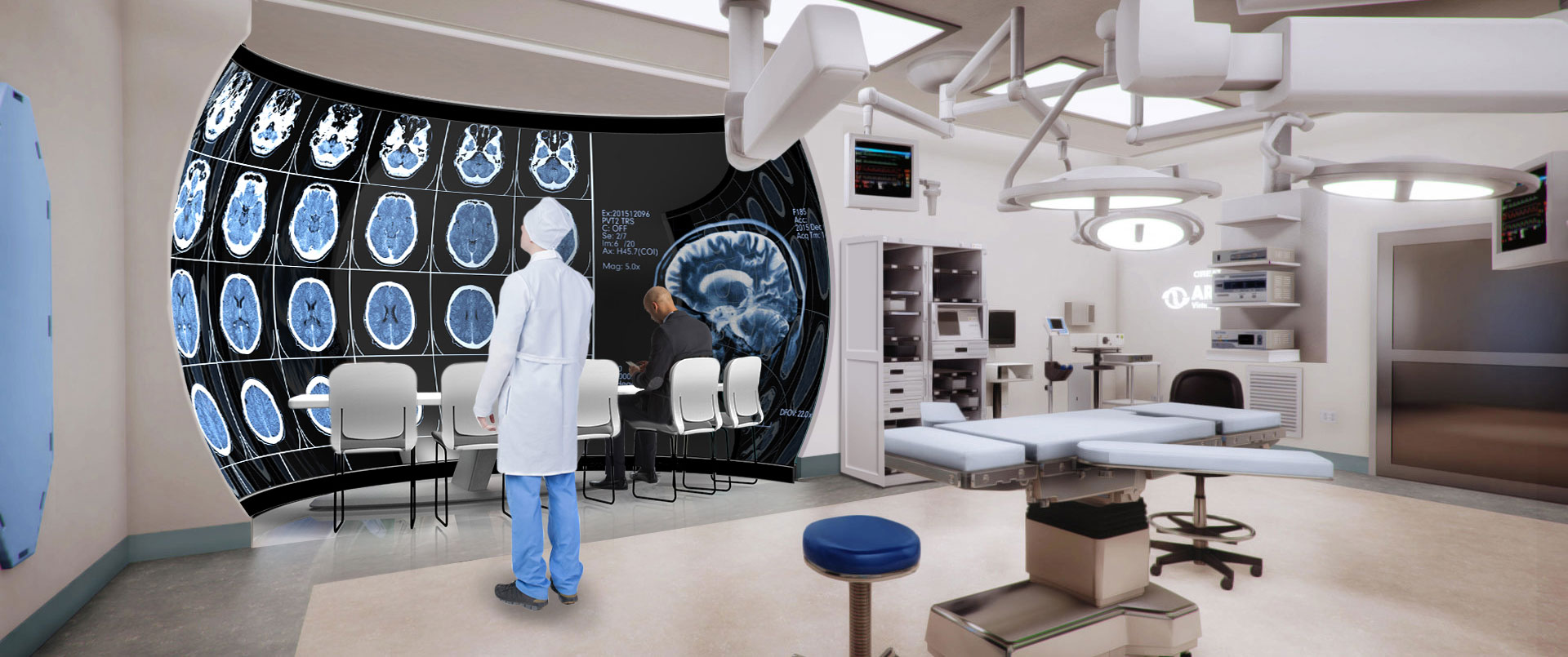
Enhanced Patient Safety: By providing a safe and controlled environment for trainees to practice surgical procedures, AR can help to improve patient safety. Trainees can make mistakes and learn from them without putting real patients at risk. This can help to reduce the incidence of surgical errors and complications.
Objective Assessment: AR systems can provide objective assessments of a trainee’s performance, based on metrics such as accuracy, efficiency, and error rate. This can help to ensure that trainees are meeting the required standards of competence before they are allowed to perform surgical procedures on real patients.
Examples of AR Applications in Surgical Training
Anatomical Visualization: Several AR applications are available that allow trainees to visualize anatomical structures in 3D, superimposed directly onto a patient or anatomical model. For example, the HoloAnatomy app from Case Western Reserve University allows users to explore the human body in detail using Microsoft HoloLens.
Surgical Simulation: AR can be used to create realistic surgical simulations that allow trainees to practice surgical procedures in a safe and controlled environment. For example, the Osso VR platform uses AR to simulate a variety of surgical procedures, including orthopedic surgery, neurosurgery, and cardiovascular surgery.
Guided Surgery: AR can provide real-time guidance during surgical procedures, helping trainees to refine their technique and improve their precision. For example, the Augmedics Xvision system uses AR to overlay a 3D image of the patient’s spine onto the surgical field, guiding the surgeon’s movements and reducing the risk of complications.
Skills Assessment: AR can be used to assess a trainee’s surgical skills, based on metrics such as accuracy, efficiency, and error rate. For example, the FundamentalVR platform uses AR to assess a trainee’s performance on a variety of surgical tasks, providing objective feedback and identifying areas for improvement.
Challenges and Future Directions
While AR holds immense promise for surgical training, several challenges need to be addressed to fully realize its potential:
Technological Limitations: AR technology is still evolving, and there are limitations in terms of image quality, tracking accuracy, and computational power. As technology advances, these limitations will likely be overcome.
Cost: AR hardware and software can be expensive, which may limit its accessibility to some institutions. However, as AR technology becomes more widespread, the cost is likely to decrease.
Integration with Existing Curricula: Integrating AR into existing surgical training curricula can be challenging, as it requires changes to teaching methods and assessment strategies. However, with careful planning and implementation, AR can be seamlessly integrated into existing curricula.
Validation: More research is needed to validate the effectiveness of AR in surgical training. Studies are needed to compare the outcomes of trainees who are trained using AR with those who are trained using traditional methods.
The Future of Surgical Training
Despite these challenges, the future of surgical training is undoubtedly intertwined with AR. As the technology continues to mature, we can expect to see even more sophisticated and immersive AR applications that transform the way surgeons are trained. AR has the potential to democratize surgical education, making it more accessible, affordable, and effective for trainees around the world.
Conclusion
Augmented reality is poised to revolutionize surgical training by offering enhanced anatomical understanding, improved surgical skills, increased accessibility, reduced costs, personalized learning, enhanced patient safety, and objective assessment. While challenges remain, the potential benefits of AR are undeniable. As the technology continues to evolve and become more affordable, it is likely to become an increasingly integral part of surgical education, shaping the future of surgery and improving patient outcomes. The integration of AR into surgical training is not just a technological advancement; it represents a paradigm shift in how we prepare the next generation of surgeons, empowering them with the tools and knowledge they need to excel in an increasingly complex and demanding field.


Comments
Post a Comment