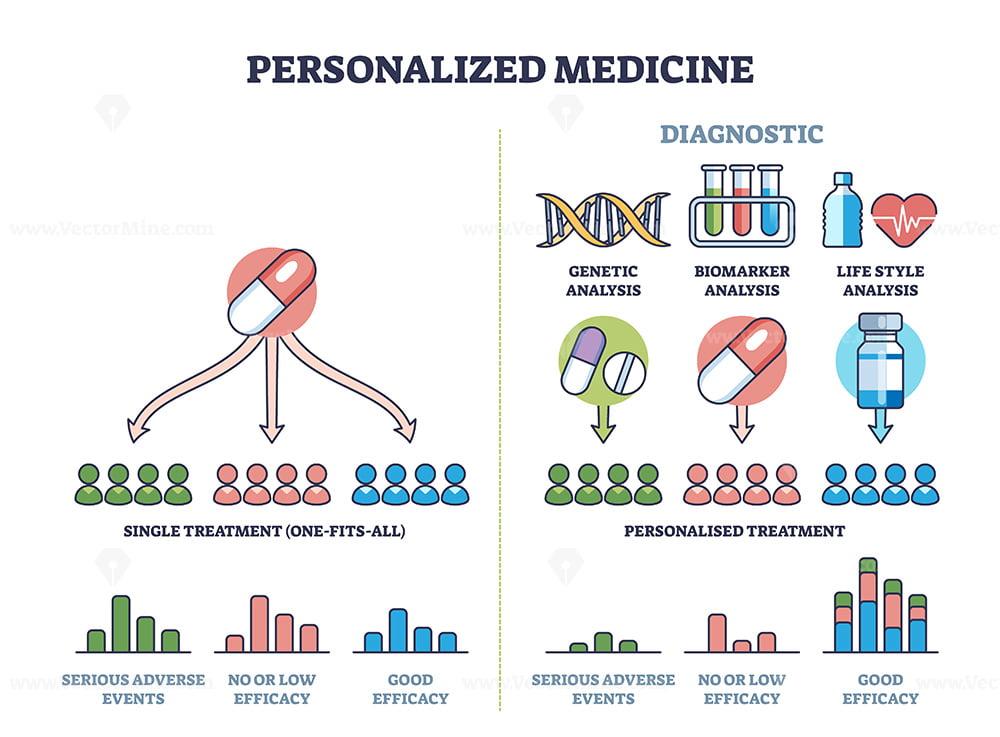
Personalized medicine, also known as precision medicine, represents a revolutionary shift in healthcare, moving away from a one-size-fits-all approach to a more tailored and individualized strategy. By leveraging an individual’s unique genetic makeup, lifestyle, and environmental factors, personalized medicine aims to provide more accurate diagnoses, targeted treatments, and preventive measures, ultimately optimizing patient outcomes.
The Promise of Personalized Medicine
The potential benefits of personalized medicine are vast and far-reaching:
- More Accurate Diagnoses: Personalized medicine can enable earlier and more accurate diagnoses by identifying specific biomarkers and genetic predispositions associated with various diseases.
- Targeted Therapies: By understanding an individual’s genetic profile, doctors can select the most effective treatments with minimal side effects, avoiding the trial-and-error approach often associated with traditional medicine.
- Preventive Strategies: Personalized medicine can identify individuals at high risk for certain diseases, allowing for the implementation of proactive preventive measures, such as lifestyle modifications, targeted screenings, and prophylactic treatments.
- Improved Drug Development: Personalized medicine can accelerate drug development by identifying specific patient populations that are most likely to respond to a particular drug, leading to more efficient clinical trials and faster approval processes.
- Reduced Healthcare Costs: By optimizing treatment strategies and preventing disease progression, personalized medicine has the potential to reduce overall healthcare costs in the long run.
Key Components of Personalized Medicine
Personalized medicine relies on several key components:
- Genomics: Genomics is the study of an individual’s entire genome, including genes and their interactions with each other and the environment. Genomic information can reveal genetic predispositions to diseases, drug response variations, and other factors that influence health outcomes.
- Biomarkers: Biomarkers are measurable indicators of a biological state or condition. They can be used to diagnose diseases, monitor treatment response, and predict disease progression.
- Data Analytics: Personalized medicine generates vast amounts of data, including genomic data, clinical data, and lifestyle data. Data analytics techniques are essential for analyzing this data and identifying patterns that can inform clinical decision-making.
- Electronic Health Records (EHRs): EHRs are digital versions of patients’ medical records. They provide a centralized repository for patient information, facilitating data sharing and analysis.
- Point-of-Care Diagnostics: Point-of-care diagnostics are medical tests that can be performed at or near the site of patient care. They provide rapid results, enabling timely clinical decision-making.
Applications of Personalized Medicine

Personalized medicine is already being applied in various areas of healthcare:
- Oncology: Personalized medicine is revolutionizing cancer treatment. By analyzing the genetic makeup of tumors, doctors can identify specific mutations that drive cancer growth and select targeted therapies that block these mutations.
- Pharmacogenomics: Pharmacogenomics studies how genes affect a person’s response to drugs. This information can be used to optimize drug selection and dosage, minimizing side effects and maximizing efficacy.
- Cardiovascular Disease: Personalized medicine can identify individuals at high risk for cardiovascular disease based on their genetic profile and lifestyle factors. This allows for the implementation of preventive measures, such as lifestyle modifications and medication, to reduce the risk of heart attacks and strokes.
- Infectious Diseases: Personalized medicine can help identify individuals who are more susceptible to certain infections based on their genetic makeup. This allows for the implementation of targeted prevention strategies, such as vaccination and prophylactic antibiotics.
- Rare Diseases: Personalized medicine can aid in the diagnosis and treatment of rare diseases, which are often difficult to diagnose due to their rarity and complex genetic basis.
Challenges and Opportunities
Despite its immense potential, personalized medicine faces several challenges:
- Data Privacy and Security: Personalized medicine relies on the collection and analysis of sensitive patient data, raising concerns about data privacy and security. Robust data protection measures are essential to ensure that patient data is not misused or compromised.
- Data Integration and Interoperability: Personalized medicine requires the integration of data from various sources, including genomic data, clinical data, and lifestyle data. However, data integration can be challenging due to the lack of standardized data formats and interoperability between different healthcare systems.
- Cost and Accessibility: Personalized medicine can be expensive, making it inaccessible to many patients. Efforts are needed to reduce the cost of personalized medicine technologies and ensure that they are accessible to all who can benefit from them.
- Regulatory Framework: The regulatory framework for personalized medicine is still evolving. Clear and consistent regulations are needed to ensure the safety and efficacy of personalized medicine technologies.
- Education and Training: Healthcare professionals need to be educated and trained in the principles and applications of personalized medicine. This will ensure that they are able to effectively utilize personalized medicine technologies in their clinical practice.
Despite these challenges, the future of personalized medicine is bright. Ongoing research and technological advancements are addressing these challenges and paving the way for the widespread adoption of personalized medicine.
The Future of Personalized Medicine
The future of personalized medicine holds immense promise:
- Artificial Intelligence (AI): AI is playing an increasingly important role in personalized medicine. AI algorithms can analyze vast amounts of data to identify patterns and predict patient outcomes, enabling more accurate diagnoses and targeted treatments.
- Wearable Technology: Wearable devices, such as smartwatches and fitness trackers, are generating a wealth of data about individuals’ health and lifestyle. This data can be used to personalize healthcare interventions and promote healthy behaviors.
- 3D Printing: 3D printing is being used to create personalized medical devices, such as prosthetics and implants, that are tailored to an individual’s unique anatomy.
- Gene Editing: Gene editing technologies, such as CRISPR, hold the potential to correct genetic defects that cause disease. While gene editing is still in its early stages, it has the potential to revolutionize the treatment of genetic diseases.
- Liquid Biopsies: Liquid biopsies are blood tests that can detect cancer cells or DNA fragments shed by tumors. Liquid biopsies can be used to diagnose cancer early, monitor treatment response, and detect recurrence.
- Nanotechnology: Nanotechnology is being used to develop new drug delivery systems that can target drugs directly to cancer cells, minimizing side effects and maximizing efficacy.
Conclusion
Personalized medicine is transforming healthcare by tailoring treatments to individual needs. By leveraging an individual’s unique genetic makeup, lifestyle, and environmental factors, personalized medicine aims to provide more accurate diagnoses, targeted treatments, and preventive measures. While challenges remain, ongoing research and technological advancements are paving the way for the widespread adoption of personalized medicine, promising a future of healthcare that is more precise, effective, and patient-centered. As technology advances and our understanding of the human genome deepens, personalized medicine will become an increasingly integral part of healthcare, improving the lives of countless individuals. The key lies in addressing the ethical considerations, ensuring data privacy, and promoting equitable access to these potentially life-changing advancements. Only then can we fully realize the transformative power of personalized medicine.


Comments
Post a Comment