Introduction
Nanotechnology, the manipulation of matter at the atomic and molecular scale, has emerged as a revolutionary field with the potential to transform various aspects of our lives. Among its numerous applications, nanotechnology holds immense promise in revolutionizing drug delivery systems. Conventional drug delivery methods often face limitations such as poor drug solubility, non-specific targeting, and systemic side effects. Nanotechnology-based drug delivery systems offer innovative solutions to overcome these challenges, leading to more effective and personalized treatments.
Understanding Nanotechnology
Nanotechnology involves the design, production, and application of materials and devices at the nanoscale, typically ranging from 1 to 100 nanometers. At this scale, materials exhibit unique physical, chemical, and biological properties that differ significantly from their bulk counterparts. These distinctive properties arise from the increased surface area-to-volume ratio and quantum mechanical effects, enabling nanoparticles to interact with biological systems in novel ways.
Advantages of Nanotechnology in Drug Delivery
Nanotechnology-based drug delivery systems offer several advantages over conventional methods:
Enhanced Drug Solubility: Many drugs exhibit poor water solubility, hindering their absorption and bioavailability. Nanoparticles can encapsulate or bind to drugs, improving their solubility and enabling efficient delivery to the target site.
Targeted Drug Delivery: Nanoparticles can be engineered to selectively target specific cells or tissues, minimizing off-target effects and maximizing therapeutic efficacy. This targeted approach reduces the exposure of healthy tissues to toxic drugs, improving patient outcomes.
Controlled Drug Release: Nanoparticles can be designed to release drugs in a controlled manner, ensuring sustained therapeutic levels and reducing the need for frequent dosing. This controlled release can be triggered by various stimuli, such as pH, temperature, or enzymes, allowing for precise drug delivery at the desired location and time.

Improved Bioavailability: Nanoparticles can enhance drug absorption and bioavailability by protecting drugs from degradation in the gastrointestinal tract and facilitating their transport across biological barriers, such as the blood-brain barrier.
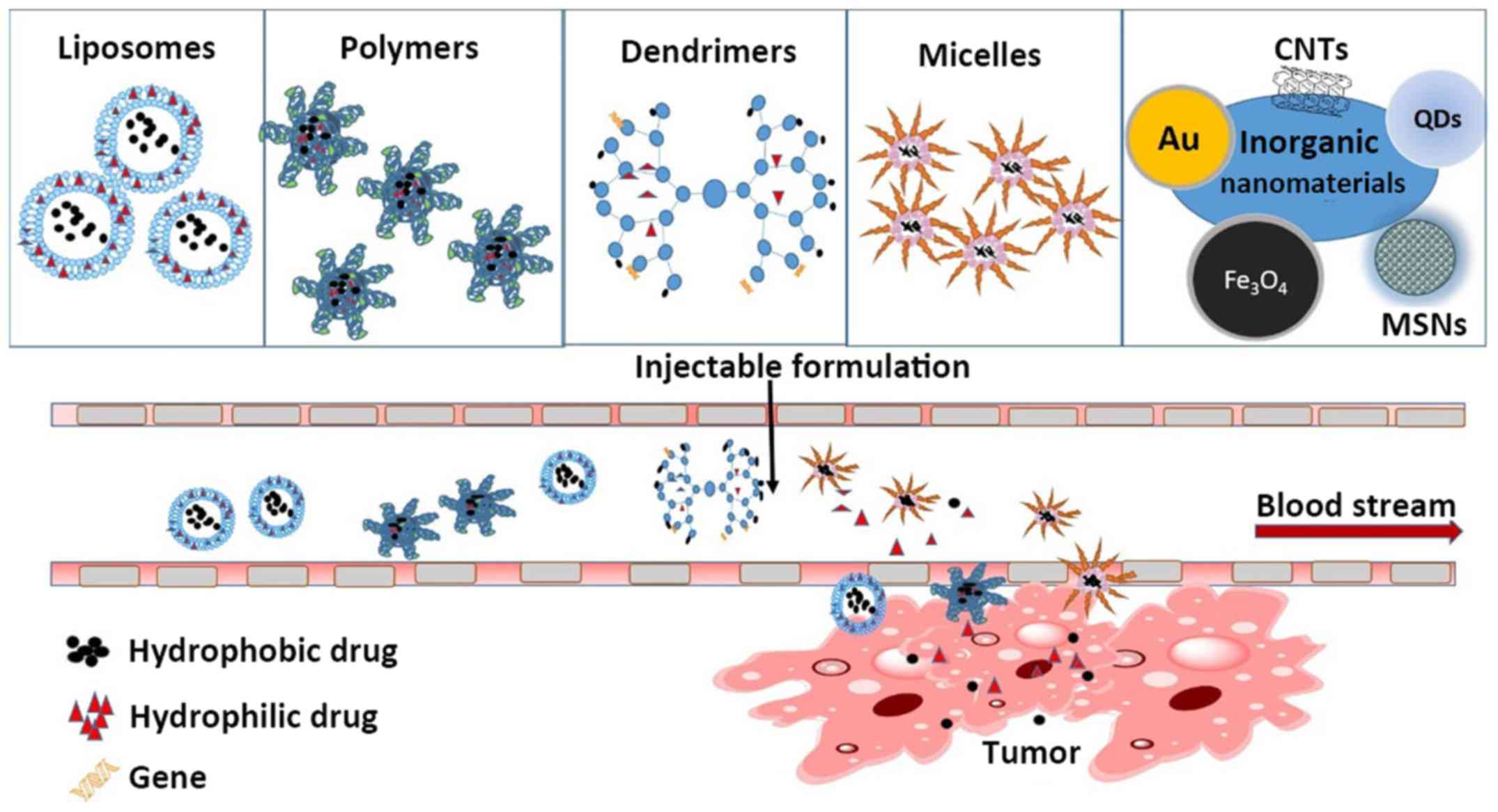
Reduced Toxicity: By targeting drugs to specific cells or tissues, nanotechnology-based drug delivery systems can minimize systemic exposure and reduce the risk of adverse side effects.
Types of Nanoparticles for Drug Delivery
Various types of nanoparticles have been explored for drug delivery applications, each with its unique properties and advantages:
Liposomes: Liposomes are spherical vesicles composed of lipid bilayers, similar to cell membranes. They can encapsulate both hydrophilic and hydrophobic drugs, protecting them from degradation and enabling targeted delivery.
Polymeric Nanoparticles: Polymeric nanoparticles are made from synthetic or natural polymers. They offer excellent biocompatibility, biodegradability, and versatility in drug encapsulation and release.
Dendrimers: Dendrimers are highly branched, tree-like molecules with a well-defined structure. They can encapsulate drugs within their branches or attach them to their surface, allowing for controlled drug release and targeted delivery.
Carbon Nanotubes: Carbon nanotubes are cylindrical structures made of carbon atoms. They possess exceptional strength, electrical conductivity, and drug-carrying capacity.
Quantum Dots: Quantum dots are semiconductor nanocrystals that exhibit unique optical properties. They can be used for drug delivery and imaging, allowing for real-time monitoring of drug distribution and efficacy.
Applications of Nanotechnology in Drug Delivery
Nanotechnology-based drug delivery systems have shown promising results in various therapeutic areas:
Cancer Therapy: Nanoparticles can selectively target cancer cells, delivering chemotherapeutic drugs directly to the tumor site while sparing healthy tissues. This targeted approach can improve treatment efficacy and reduce side effects.
Infectious Diseases: Nanoparticles can be used to deliver antibiotics, antivirals, and antifungals to infected cells, enhancing drug efficacy and reducing the development of drug resistance.
Cardiovascular Diseases: Nanoparticles can deliver drugs to damaged blood vessels, promoting tissue repair and preventing blood clot formation.
Neurological Disorders: Nanoparticles can cross the blood-brain barrier, delivering drugs to the brain and treating neurological disorders such as Alzheimer’s disease and Parkinson’s disease.
Gene Therapy: Nanoparticles can deliver genes or RNA molecules to cells, correcting genetic defects or silencing disease-causing genes.
Challenges and Future Directions
Despite the immense potential of nanotechnology in drug delivery, several challenges need to be addressed:
Toxicity: The potential toxicity of nanoparticles is a major concern. Thorough evaluation of nanoparticle biocompatibility and long-term effects is crucial.
Scale-up and Manufacturing: Scaling up the production of nanoparticles for clinical use can be challenging. Cost-effective and reproducible manufacturing methods are needed.
Regulatory Issues: Nanotechnology-based drug delivery systems are subject to regulatory scrutiny. Clear guidelines and standards are needed to ensure their safety and efficacy.
Clinical Translation: Translating nanotechnology-based drug delivery systems from the laboratory to the clinic requires careful design, rigorous testing, and close collaboration between researchers, clinicians, and regulatory agencies.
The future of nanotechnology in drug delivery is bright. Ongoing research is focused on developing more sophisticated nanoparticles with enhanced targeting capabilities, controlled release mechanisms, and improved biocompatibility. Nanotechnology is also being combined with other advanced technologies, such as artificial intelligence and microfluidics, to create personalized drug delivery systems tailored to individual patient needs.
Conclusion
Nanotechnology has emerged as a powerful tool for revolutionizing drug delivery systems. Nanoparticles offer numerous advantages over conventional methods, including enhanced drug solubility, targeted drug delivery, controlled drug release, improved bioavailability, and reduced toxicity. Nanotechnology-based drug delivery systems have shown promising results in various therapeutic areas, including cancer therapy, infectious diseases, cardiovascular diseases, neurological disorders, and gene therapy. While challenges remain, ongoing research and development efforts are paving the way for the clinical translation of nanotechnology-based drug delivery systems, promising more effective and personalized treatments for a wide range of diseases.


Comments
Post a Comment